REMOTE
- Rita Silva, IPO-Porto, Portugal
- Phenotypes: Ovarian Cancer; Sepsis
| OHDSI Home | Forums | Wiki | Github |
REMOTE
While I’m unable to attend, the use of imaging raises device questions. The description says Optical Coherence Tomography (OCT) is the gold standard and Fluorescein Angiography (FA) may be used adjunctively. Will the study identify the devices used for diagnosis and, in particular by UDI? This is an opportunity to determine whether devices from different manufacturers and different versions or models from the same manufacturer exhibit differences in their ability to assist with the diagnosis.
thank you @doleary . The content you pointed out is just for context or pre-read. The study is just to build code lists (e.g., list of SNOMED codes used to identify DME - as done by humans vs AI). I think what I am trying to say is, we wont be addressing the device question in this effort.
Thank you for the clarification about the scope and about the devices that may be nvolved.
That won’t work for ovarian cancer. In the claims data, you have no stages and barely any metastases. The Veradigm EHR is for ambulatory patients, where cancers are not diagnosed. And the hospital EHRs Optum is not for cancer patients and therefore the information you are looking for is sporadic at best. To get reliable cancer data you need to go to the tumor registries and EHRs from cancer centers.
Part 1: Vignette
You are an epidemiologist at a biopharma company. Your immediate objective is to deliver a high-PPV concept set for Systemic Lupus Erythematosus (SLE) — Systemic, to be embedded within a validated prevalent, active, moderate-to-severe SLE phenotype algorithm used for characterization, comparative effectiveness, and HTA-relevant steroid-sparing analyses.
Data Environment: You will work across large administrative claims and EHR datasets standardized to the OMOP Common Data Model (CDM). Concept sets must be authored in the Condition domain only (OMOP standard preferred). (Laboratory, procedures, drugs, visits, and specialty are handled by separate concept sets and the phenotype algorithm, not this concept set.)
Key Epidemiological Parameters (from the study design that will use this concept set)
Target population: Patients with prevalent, systemic SLE capable of having active, moderate-to-severe disease. Age inclusive (adult & pediatric). Pregnancy status not a restriction for cohort entry.
Index anchoring: Diagnosis-anchored; in the phenotype, confirmation may occur via repeat diagnosis, rheumatology proximity, SLE-directed therapy, or serology.
Required lookback: ≥365 days prior observation (for downstream baseline covariates).
Nature of condition for this use case: Prevalent SLE (not incident).
Core exclusions handled at concept-set level: cutaneous-only lupus, drug-induced lupus, neonatal lupus, “history of”/“screening for”/“rule-out” lupus, isolated antiphospholipid/lupus anticoagulant without SLE.
Confounding & severity: Managed in phenotype & study design via steroid dose strata, flare proxies, organ involvement flags, treatment history—not by broadening/complicating the diagnosis code list.
Structured Research Question (OHDSI Madlibs style, exemplar for downstream analyses) “Among patients with prevalent systemic SLE in OMOP-standardized claims/EHR data, what is the 12-month pre-index distribution of average daily oral glucocorticoid dose and the 12-month post-initiation risk of inadequate response after starting anifrolumab or belimumab, measured during a study-specific time-at-risk?”
Concept Set Challenge (singular, unambiguous)
Build the Concept Set: “Systemic Lupus Erythematosus — Systemic (Condition domain)”
Scope = diagnosis codes that explicitly denote systemic SLE (including “SLE with organ involvement”). Explicitly exclude: cutaneous-only lupus, drug-induced lupus, neonatal lupus, “history of”/“screening”/“rule-out”/“suspected” lupus, isolated antiphospholipid/lupus anticoagulant without SLE. Do not include labs, drugs, visits, specialty, or procedures here (they are separate concept sets).
Part 2: Structured Clinical Specification
(Guidance for code inclusion/exclusion; informs but does not encode phenotype logic.)
1. Core Clinical Definition
Case Definition (clinical meaning of the target concept) A chronic, systemic autoimmune disease characterized by multisystem involvement and immunologic abnormalities consistent with SLE (e.g., anti-dsDNA and/or anti-Sm antibodies, hypocomplementemia). In routine care, SLE is managed primarily by rheumatology and treated with antimalarials, immunosuppressants, biologics, and judicious glucocorticoids.
Diagnostic Criteria (for context; not encoded in this concept set)
Serology: ANA (entry), anti-dsDNA and/or anti-Sm positivity; low C3/C4.
Organ involvement: renal (proteinuria, biopsy-proven LN), hematologic, mucocutaneous, musculoskeletal, neuropsychiatric, serositis.
Classification frameworks (e.g., 2019 EULAR/ACR) inform measurement concept sets but are not used to gate diagnosis codes here.
Presentation & Course Relapsing-remitting with flares and remissions; severity ranges from mild mucocutaneous/arthralgia to life-threatening organ disease (e.g., nephritis). Long-term morbidity strongly influenced by cumulative glucocorticoid exposure.
Synonyms & Closely Related Terms (for search mapping) Systemic lupus erythematosus; SLE; systemic lupus; disseminated lupus erythematosus (historic); lupus with organ involvement (e.g., “SLE with nephritis”). Do not conflate with cutaneous lupus or drug-induced lupus.
Differential Diagnoses (Conditions to be distinguished and not considered inclusive) Cutaneous lupus erythematosus (CLE), drug-induced lupus (DIL), neonatal lupus, undifferentiated connective tissue disease, mixed connective tissue disease, systemic sclerosis, dermatomyositis/polymyositis, Sjögren’s, rheumatoid arthritis, antiphospholipid syndrome (APS) without SLE.
Common Treatments/Management (signals of disease, handled elsewhere) Hydroxychloroquine, azathioprine, mycophenolate, methotrexate, cyclophosphamide; calcineurin inhibitors (e.g., tacrolimus; voclosporin for LN); biologics (belimumab, anifrolumab); off-label rituximab; systemic glucocorticoids (oral and pulse). These support phenotype confirmation but are not part of this diagnosis concept set.
2. Scope Boundaries and Exclusions (deterministic)
IN SCOPE (include):
Diagnosis concepts that explicitly reference systemic SLE, including general SLE and “SLE with organ involvement” (e.g., renal, hematologic, neurologic).
Pediatric/juvenile SLE terms when clearly systemic.
Source codes that map (via OMOP) to standardized SNOMED CT “Systemic lupus erythematosus (disorder)” and descendants representing systemic disease (not cutaneous/drug-induced/neonatal).
OUT OF SCOPE (exclude):
Cutaneous-only lupus (all forms, including discoid, subacute cutaneous).
Drug-induced lupus (all forms).
Neonatal lupus.
“History of”, “personal history of”, “screening for”, “suspected”, “rule-out” lupus and other non-current/problem-list or administrative qualifiers.
Isolated antiphospholipid syndrome/lupus anticoagulant without an SLE diagnosis.
Non-SLE entities containing the word “lupus” (e.g., lupus vulgaris—cutaneous TB).
Edge-Case Resolutions (apply consistently):
“Lupus nephritis”:
Include when the code/text explicitly links nephritis to SLE (e.g., “SLE with nephritis”).
Exclude renal codes without an SLE reference (use a separate LN concept set for organ-severity analyses).
Overlap syndromes (e.g., SLE + systemic sclerosis): Include the SLE diagnosis if the code is an SLE code; exclusions for competing CTDs are handled in the phenotype algorithm.
Remission modifiers: If the code is a problem-status indicating history/remission rather than a current SLE diagnosis, exclude.
3. Temporal Context (crucial)
Temporality requirement for this concept set: Prevalent SLE.
Impact on code selection:
Exclude “history of”, “screening”, “suspected/rule-out” constructs.
Do not attempt to encode incident status, confirmation intervals, or activity here—those are phenotype logic elements using separate concept sets (labs, drugs, specialty, visits).
4. Clinical Granularity & Use-Case Requirements
Severity/Acuity: The diagnosis concept set is severity-agnostic by design. Severity (“active, moderate-to-severe”) will be operationalized in the phenotype via steroid dose strata, flare proxies, and organ involvement flags.
Etiology: Restrict to primary systemic SLE; exclude drug-induced lupus.
Sensitivity/Specificity Trade-off: For downstream comparative effectiveness & HTA, precision (PPV) is prioritized.
Prefer explicit systemic SLE terms.
Avoid broad/ambiguous “lupus” terms that do not specify systemic disease.
Keep cutaneously-scoped and drug-induced constructs out to protect PPV.
5. Population & Data Context
Population subgroups (handled in study/phenotype, not in this concept set): pediatric vs adult; renal involvement; baseline glucocorticoid dose strata; prior biologic exposure; refractory trajectory flags.
Do not include Measurement, Drug, Visit/Provider-specialty, or Procedure concepts here. Those belong to separate concept sets:
Serologies (ANA, anti-dsDNA, anti-Sm, C3/C4)
Glucocorticoids (oral/pulse), antimalarials, ISDs, biologics
Rheumatology specialty visits; ED/inpatient visits
Renal biopsy; urine protein/proteinuria measures
Title: SLE — Systemic (diagnosis, Condition domain; excludes cutaneous/drug-induced/neonatal; excludes history/screening/suspected; includes “SLE with organ involvement”)
Intended Use: Built for prevalent SLE phenotyping in CE/HTA workflows with PPV priority; severity/activity handled outside the diagnosis concept set.
Build a concept set for Systemic Lupus Erythematosus — systemic form that captures current, clinically active disease for use in a phenotype for clinically active, prevalent SLE supporting comparative-effectiveness work. The concept set must reflect explicit systemic SLE diagnoses (including “SLE with organ involvement”). The motivating question is generalized as: among patients with active systemic SLE, what are 12-month outcomes (e.g., steroid burden, inadequate response) after initiating Drug A versus Drug B?
Clinical case definition: A chronic, systemic autoimmune disease characterized by multisystem involvement and immunologic abnormalities consistent with SLE (e.g., anti-dsDNA and/or anti-Sm antibodies, hypocomplementemia). In routine care, SLE is managed primarily by rheumatology and treated with antimalarials, immunosuppressants, biologics, and judicious glucocorticoids.
Diagnostic Criteria (for context; not encoded in this concept set) Serology: ANA (entry), anti-dsDNA and/or anti-Sm positivity; low C3/C4. Organ involvement: renal (proteinuria, biopsy-proven LN), hematologic, mucocutaneous, musculoskeletal, neuropsychiatric, serositis. Classification frameworks (e.g., 2019 EULAR/ACR) inform measurement concept sets but are not used to gate diagnosis codes here.
Presentation & Course Relapsing-remitting with flares and remissions; severity ranges from mild mucocutaneous/arthralgia to life-threatening organ disease (e.g., nephritis). Long-term morbidity strongly influenced by cumulative glucocorticoid exposure.
Common Treatments/Management Hydroxychloroquine, azathioprine, mycophenolate, methotrexate, cyclophosphamide; calcineurin inhibitors (e.g., tacrolimus; voclosporin for LN); biologics (belimumab, anifrolumab); off-label rituximab; systemic glucocorticoids (oral and pulse). These support phenotype confirmation but are not part of this diagnosis concept set.
Clinical Scope and Granularity:
Related, differential or comorbid conditions that are not sufficient for inclusion.
Synonyms
Build a diagnosis concept set for Rheumatoid Arthritis (RA)—adult, systemic form that captures prevalent, established disease with high clinical validity. Include RA diagnoses and RA-linked extra-articular manifestations. This concept set will support an observational study that aims to answer the following research question:
Amongst patients who are diagnosed with [Rheumatoid Arthritis], what are the patient’s characteristics from their medical history (including demographics, comorbidities, HCRU, and total costs).
The concept set will be used in the phenotype of patients with Rheumatoid Arthritis (RA) as the target cohort in this research question.
Clinical case definition: A chronic, systemic autoimmune and inflammatory disease primarily characterized by persistent synovitis of diarthrodial joints, often symmetrical. The disease trajectory involves inflammation of the synovial membrane, leading to potential cartilage destruction, bone erosions, and joint deformity. Systemic features include the production of autoantibodies (Rheumatoid Factor (RF) and anti-citrullinated peptide antibodies (ACPA)).
Diagnostic Criteria: Diagnosis is based on established clinical criteria (e.g., ACR/EULAR 2010 criteria), which consider the pattern of joint involvement, serology (RF/ACPA), acute phase reactants (ESR/CRP), and duration of symptoms. In RWD, we rely on the clinician’s recorded diagnosis based on these criteria.
Presentation and Course: Presentation typically involves insidious onset of pain, stiffness (especially morning stiffness), and swelling in multiple joints (polyarthritis), commonly affecting the small joints of the hands and feet. The course is typically chronic and progressive without adequate treatment, characterized by flares and potential remission.
Differential Diagnoses: (Conditions to be distinguished and not considered inclusive)
Common Treatments/Management: Conventional synthetic DMARDs (e.g., Methotrexate), biologic DMARDs (e.g., TNF inhibitors), targeted synthetic DMARDs (e.g., JAK inhibitors), systemic glucocorticoids.
Clinical Scope and Granularity
Related, differential conditions or comorbidities that are not sufficient for inclusion
Synonyms
Construct a diagnosis concept set for Diabetic Macular Edema (DME)—macular thickening and/or intra-/sub-retinal fluid explicitly attributable to diabetes mellitus—to support a treatment-anchored phenotype. The set must capture current, clinically active DME.
This concept set will support an observational study that aims to answer the following research question:
Among adult diabetic patients on drug-a anti-diabetic medication what is the incidence rate of developing Diabetic Macular Edema (DME).
The concept set will be used in the phenotype of the outcome Diabetic Macular Edema (DME).
Clinical case definition: Retinal thickening and/or intra/sub-retinal fluid in the macula due to diabetes mellitus (type 1 or 2). Diagnostic criteria is confirmed through OCT evidence of macular thickening and/or intra/sub-retinal fluid.
Presentation & Course: Blurred vision, metamorphopsia; may be asymptomatic early. Often chronic, managed with anti-VEGF, steroids, and/or focal/grid laser; treat-and-extend or PRN patterns are common.
Differential Diagnoses (Conditions to be distinguished and not considered inclusive)
Common Treatments/Management: Intravitreal anti-VEGF; intravitreal/periocular corticosteroids (dexamethasone, fluocinolone implants); focal/grid macular laser; serial OCT monitoring.
Clinical Scope and Granularity
Related, differential conditions or comorbidities that are not sufficient for inclusion
Synonyms
Develop a diagnosis concept set for Acute Proximal Lower-Extremity Deep-Vein Thrombosis (LE-DVT)—an incident, clinically acute thrombus in popliteal or more proximal deep veins—to support a cancer-associated thrombosis phenotype. The set must represent current, incident proximal LE-DVT (including incidental events).
This concept set will support an observational study that aims to answer the following research question: Among adults with active malignancy receiving therapeutic anticoagulation, what is the comparative effectiveness of drug A to prevent Lower-Extremity Deep-Vein Thrombosis.
The concept set will be used in the phenotype of the outcome Lower-Extremity Deep-Vein Thrombosis.
Clinical case definition: An acute thrombus in the proximal deep veins of the lower extremity—popliteal, femoral (common/superficial), deep femoral, iliac, or inferior vena cava segments—presenting symptomatically (e.g., unilateral leg swelling/pain) or incidentally on imaging in a patient with active malignancy.
Diagnostic criteria (objective confirmation).
Presentation & course (typical). Acute onset limb swelling, pain, warmth; occasionally asymptomatic if discovered during cancer imaging. Risk of extension/embolization without treatment.
Differential diagnoses (Conditions to be distinguished and not considered inclusive). Isolated distal calf DVT (peroneal/posterior/anterior tibial, muscular veins), superficial thrombophlebitis, chronic post-thrombotic changes, lympema/venous insufficiency, cellulitis, Baker cyst.
Common treatments/management (positive proxies). Therapeutic-intensity DOACs (apixaban/rivaroxaban/edoxaban) or LMWH, less commonly VKA; in select cases thrombectomy/thrombolysis/IVC filter. (Treatment will be enforced by phenotype logic; do not add drug codes to this condition concept set.)
Clinical Scope and Granularity
Related, differential conditions or comorbidities that are not sufficient for inclusion
Synonyms
Our objective is to define a concept set representing active, primary epithelial carcinoma of the ovary, fallopian tube, or peritoneum. This set must capture a confirmed diagnosis of malignant disease, not a history of it or a borderline condition. It will serve as the foundational disease definition for subsequent phenotype algorithms used in comparative effectiveness and health outcomes research focused on women with relapsed or refractory disease, ensuring we begin with a high-fidelity patient population.
Clinical case definition: Primary epithelial malignancy originating in the ovary, fallopian tube, or primary peritoneum. Predominant histology is high-grade serous carcinoma; other epithelial subtypes include low-grade serous, endometrioid, clear cell, mucinous, malignant Brenner (transitional), squamous, and carcinosarcoma (MMMT) when primary to these anatomic sites.
Diagnostic Criteria
Presentation & Course (typical).
Differential Diagnoses
Common Treatments/Management (signals the disease exists; not for concept set logic). Primary cytoreductive surgery; 1L platinum-taxane ± bevacizumab; maintenance PARP in appropriate patients; subsequent non-platinum regimens ± bevacizumab; FRα-targeted ADC for FRα-high; IO/targeted regimens in trials/practice.
Clinical Scope
Related, differential conditions or comorbidities that are not sufficient for inclusion
Synonyms
This concept set will identify Systemic Sclerosis (SSc; systemic scleroderma)—a systemic, not localized, autoimmune fibrosing vasculopathy. The set must represent current, active systemic disease. This concept set will support an observational study that aims to answer the following research objective:
The study aims to explore treatment utilization among patients newly diagnosed with systemic sclerosis in real-world data.
The concept set will be used to phenotype patients with systemic sclerosis as the target cohort in this research question.
Clinical case definition: Systemic Sclerosis (SSc), also known as systemic scleroderma, is a complex, chronic autoimmune disorder characterized by three hallmark features: immune dysregulation (autoimmunity and inflammation), microvasculopathy (vascular injury and remodeling), and progressive fibrosis (excessive collagen deposition) affecting the skin and internal organs (e.g., lungs, gastrointestinal tract, heart, kidneys).
Diagnostic Criteria: Diagnosis is clinical, often informed by the 2013 ACR/EULAR classification criteria (score ≥9). Key elements include skin thickening proximal to the MCP joints (sufficient criterion), Raynaud’s phenomenon, digital tip lesions, telangiectasias, abnormal nailfold capillaries, pulmonary arterial hypertension (PAH) and/or interstitial lung disease (ILD), and SSc-specific autoantibodies (Anti-Scl-70/Topoisomerase I, Anti-centromere, Anti-RNA polymerase III).
Presentation and Course: The presentation is heterogeneous and the course is chronic and lifelong. It is categorized based on skin involvement:
Differential Diagnoses (Conditions to be distinguished and not considered inclusive): Undifferentiated Connective Tissue Disease (UCTD), Mixed Connective Tissue Disease (MCTD), Isolated Raynaud’s phenomenon, and various scleroderma mimics (see Exclusions).
Common Treatments/Management: Management is typically overseen by a Rheumatologist. Treatments include immunosuppression (e.g., Mycophenolate Mofetil, Cyclophosphamide) and targeted therapies for ILD (Nintedanib, Tocilizumab, Rituximab).
Clinical Scope
Related, differential conditions or comorbidities that are not sufficient for inclusion
Synonyms
Hi Gowtham - so a total of 6 conditions - C01-C07, skipping C06, right?
I’m looking at your clinical descriptions in this post. - Don’t see C06
It jumps from C05 to C07
Gotchya, I made a copy paste error (lack of sleep). The GitHub repository is the source of truth. GitHub - ohdsi-studies/MindMeetsMachines: The "Minds Meet Machines" Challenge. A concept set development study by the OHDSI Phenotype development and evaluation workgroup.
Here is the 6th one @jswerdel - thank you for pointing it out and helping me fix it.
Develop a diagnosis concept set for active, non-infectious posterior-segment uveitis—encompassing intermediate uveitis, posterior uveitis, and panuveitis—to support a phenotype used in comparative effectiveness work (e.g., Drug A vs Drug B). The set must capture current, clinically active disease at or immediately preceding initiation of systemic therapy. The research aim is to compare time to treatment failure and steroid dependence after treatment start for patients with posterior uveitis.
This concept set will support an observational study that aims to answer the following research question: Among adults with non-infectious posterior-segment uveitis, what is the comparative effectiveness of drug A to prevent steroid dependency, compared to drug B.
The concept set will be used in the phenotype of patients with non-infectious posterior-segment uveitis as the target cohort in this research question.
Clinical case definition: Inflammation of the uveal tract with posterior-segment involvement—intermediate uveitis, posterior uveitis, or panuveitis—that is Non-Infectious (autoimmune/autoinflammatory; idiopathic or associated with systemic disease) and clinically active.
Diagnostic criteria:
Presentation and course: Chronic or recurrent disease with active flares; may be sight-threatening; often steroid-responsive but steroid-dependent without additional IMT.
Differential diagnoses (Conditions to be distinguished and not considered inclusive): Infectious uveitis (e.g., toxoplasma, HSV/VZV/CMV retinitis, TB, syphilis), intraocular lymphoma/other masquerades, isolated anterior uveitis, scleritis/episcleritis, non-inflammatory mimics.
Common treatments/management: High-dose systemic corticosteroids; steroid-sparing IMT (methotrexate, mycophenolate, azathioprine, cyclosporine, tacrolimus); biologics (adalimumab). Therapies are not part of this concept set.
Clinical Scope and Granularity:
Related, differential conditions or comorbidities that are not sufficient for inclusion
Synonyms
My name is Sima Mohammadi, a medical doctor and PhD candidate at the University Medical Center Utrecht (UMCU). My thesis focuses on semantic harmonization, and over the past three years, I have been involved in projects related to developing a semi-automated application for mapping multiple UMLS and non-UMLS vocabularies with the ontologies team. I am very interested in joining this workshop to learn from your experience and from other participants about how this process is handled within OHDSI, and to compare it with AI-driven phenotype generation approaches.
Welcome @Sima - it very nice to have an informatics trained PhD medical doctor in the group. You are welcome to join. The link is on top.
Mind Meets Machine YouTube Video
Part 1: https://youtu.be/igTQC4PkiCA
Part 2: https://youtu.be/7Ek3vF3Pu_E
Part 3: https://youtu.be/24FnC9FbaQU
Title: Mind Meets Machine Workshop Recap: A Scientific Evaluation of AI vs. Human-Led Concept Set Generation
The Phenotype Development and Evaluation Work Group convened a workshop, “Mind Meets Machine,” during the OHDSI 2025 Symposium. The session, co-led by @Azza_Shoaibi and @Gowtham_Rao, executed an informal exercise designed to address a critical question facing the OHDSI community: How do emerging Generative AI/LLM approaches for concept set generation compare to established human-led workflows?
This workshop directly supports the working group’s mission “to improve the quality and the reliability of the evidence we generate from observational data by advancing the science of phenotype development.” The goal was to scientifically evaluate the accuracy, completeness, and precision of these new tools before they are adopted into standard observational research processes.
The session began with a moving tribute to the late Jamie Weaver, honoring his significant contributions to the science of phenotyping and measurement error, setting a mission-driven tone for the day’s activities.
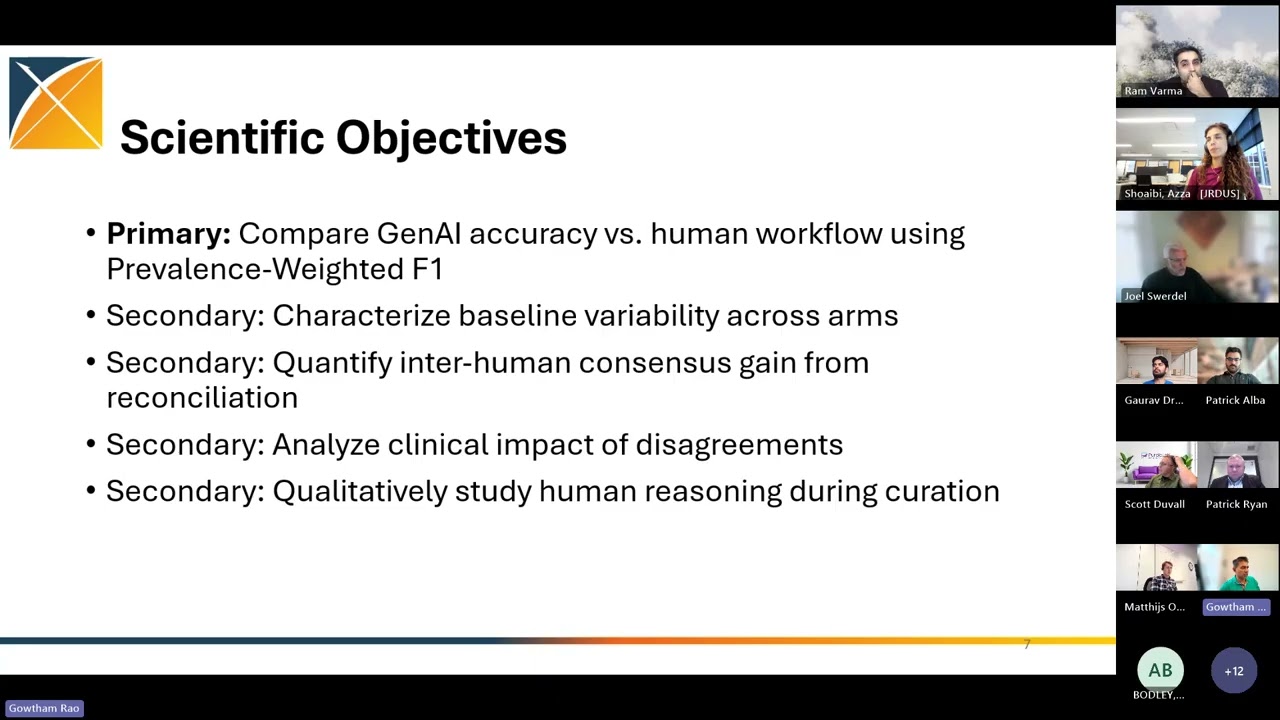
The primary objective of the experiment, operating under a OHDSI QI project, was to compare the performance of Gen AI workflows against rigorous, consensus-based human workflows. The primary metric for evaluation will be the prevalence-weighted F-score.
The experiment involved several key phases:
A key component of the workshop was a showcase of three distinct AI approaches submitted for the evaluation, demonstrating the diversity of methodologies being explored in the community:
Following the concept set generation and adjudication activities, the working group reflected on the process and preliminary observations, highlighting several fundamental challenges in the science of phenotyping:
1. Significant Variability and the Challenge of Specificity
Initial findings revealed stark differences depending on the clinical idea. For Rheumatoid Arthritis (RA), there was a surprising 94% consistency between human and machine-generated codes. In contrast, Deep Vein Thrombosis (DVT) showed less than 24% overlap.
Workshop attendees noted that the specificity of the study question dramatically impacted the task. Defining “acute proximal DVT” proved far more difficult than chronic RA, as available clinical codes often lack the necessary granularity. This creates a tension between adhering to a narrow clinical specification and the reality that significant record counts often reside on more general, ambiguous codes.
2. The “Source Problem”: Clinical Practice vs. Research Needs
A major theme of the discussion was the fundamental disconnect between how data is generated in clinical practice and the needs of observational research. Clinicians emphasized that coding in practice is driven primarily by billing and clinical operations, not research precision. This systemic gap means the raw material for phenotyping (diagnosis codes) is often not generated with research-grade precision, complicating all downstream efforts.
3. The Importance of Context and Data
The group emphasized that concept set creation cannot be divorced from the broader study design and the underlying data. Workshop attendees expressed the need to see record counts to determine the relevance of esoteric codes and noted that strategies for inclusion/exclusion depend heavily on the intended cohort logic (e.g., looking for DME in an already defined diabetic population allowed for a more inclusive approach).
The immediate next step is the formal analysis of the exercise, calculating the F-scores for each human team and AI workflow against the adjudicated gold standard. The results will be shared with the community.
Looking ahead, the working group stressed that this exercise is a stepping stone. The community must move beyond evaluating concept sets in isolation. As @Azza_Shoaibi and @JudyRac (Dr. Judith Racoosin) noted, OHDSI does not view phenotypes merely as code lists. Conceptual debates without data are often unproductive, and the ultimate validation requires running different design choices in the data to see if they affect the final patient cohort.
The goal for Phenotype February 2026 is to advance this work by having both humans and AI build complex, data-driven cohort definitions for meaningful clinical ideas, which can then be robustly evaluated across the OHDSI data network.
We extend our gratitude to the organizing team, the AI development teams, the logistical support from Will Kelly (JHU, John Hopkins University), the clinical adjudicators—Dr. @Evan_Minty (DVT), Dr. @Christopher_Mecoli (Lupus/Systemic Sclerosis, John Hopkins University), and Dr. @cindyxcai (DME, John Hopkins University), Dr. @briantoy (Posterior Uveitis, University of Southern California USC Schaeffer Institute), Dr @Liz_Park (Rheumatoid Arthritis, Columbia University)—and all workshop participants for their contributions to this vital research.
The “Minds Meet Machines” event saw high engagement, bringing together over 50 in-person participants and approximately 50 online attendees, including clinical experts, researchers, and informaticians.
The “Minds Meet Machines” challenge is now moving into the formal analysis and dissemination phase.
Current Status (October 24th 2025):
https://github.com/Ohdsi-studies/MindMeetsMachines/Validation Plan:
The analysis code is undergoing a rigorous, multi-stage validation process before the final results are generated Add Full MMM Challenge Analysis Pipeline (Phase 1–2) Implementing SAP by ghatesudi · Pull Request #7 · ohdsi-studies/MindMeetsMachines · GitHub
Timeline and Future Goals: